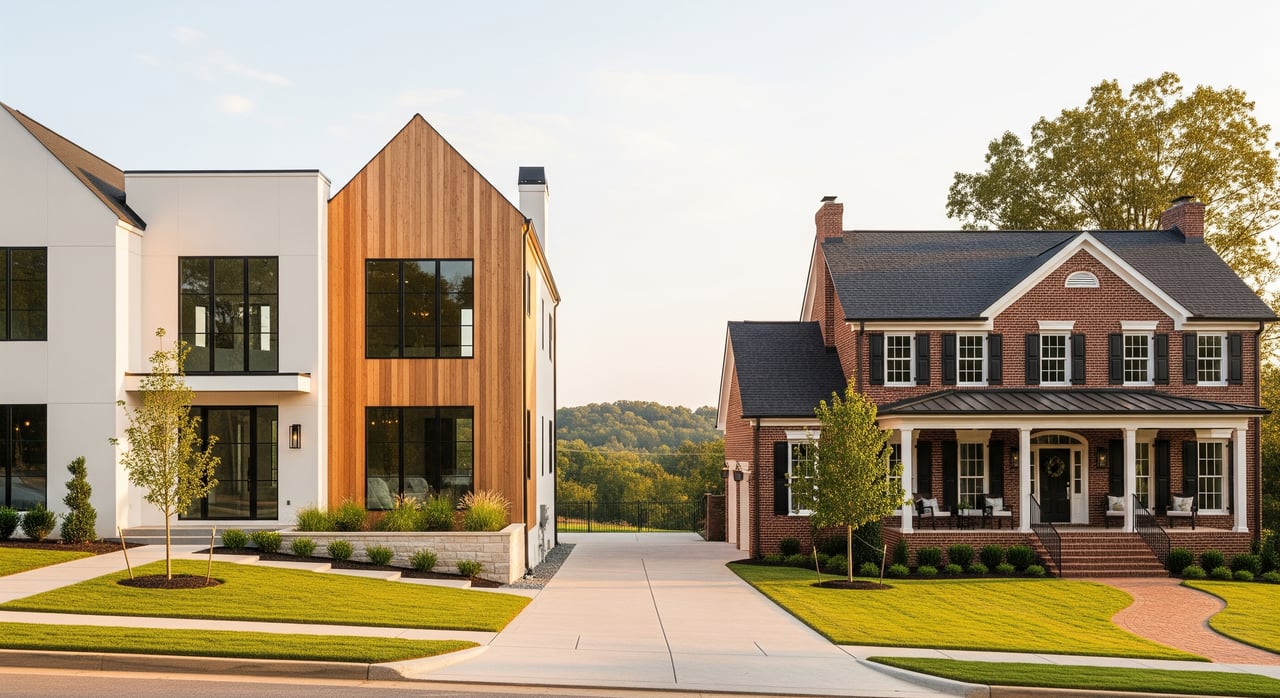
Should you build new or buy a resale in Mount Juliet? If you are eyeing Wilson County for its suburban lifestyle and access to Nashville, you are not alone. The right choice often comes down to timing, budget, commute needs, and how much customization matters to you. In this guide, you will compare costs, timelines, warranties, inspections, HOAs, and offer strategies so you can move forward with confidence. Let’s dive in.
Mount Juliet market and commute snapshot
Mount Juliet is a fast-growing suburb east of Nashville with strong demand from commuters and households relocating for newer homes and community amenities. Growth has fueled both new developments and healthy resale activity in and around the city. If you want up-to-date numbers on prices and inventory, check current MLS market reports.
Your commute can shape your decision. The primary route into Nashville is I-40 with local feeder roads. During peak hours, drive times to central Nashville often stretch, so test your route at the times you plan to travel. Commuters often favor faster move-ins like resale or quick-delivery spec homes. Remote workers may prioritize dedicated office space, energy efficiency, and neighborhood amenities over a rapid timeline.
New construction vs resale: what it really costs
Price tags do not tell the full story in Wilson County. New construction usually reflects lot premiums, builder profit, and community infrastructure. Upgrade selections can raise your final price quickly, and closing costs can be higher in some cases. Resale homes may list for less than a comparable new build in the same area, but older systems could need replacement sooner, which should be part of your budget.
You should also plan for out-of-pocket items with either path. Common add-ons include moving and interim housing, window coverings, security systems, utility hookups, and immediate maintenance.
Appraisals and financing
Upgraded new homes sometimes face appraisal gaps if recent comparable sales trail current pricing. If you rely on financing tied to appraised value, prepare a plan. Builders may offer incentives like rate buydowns or closing cost credits that help bridge gaps, but always compare incentives to your true costs. For resales, coordinate with your lender to manage potential appraisal shortfalls if you are competing over list price.
Move-in timeline: how fast can you get the keys?
Resale purchases typically close in about 30 to 60 days, depending on your financing, title work, and negotiations. Cash purchases or aligned timelines can shorten that window. You can usually move in soon after closing.
New construction varies. Quick-move or spec homes often deliver in roughly 1 to 4 months if already underway. Custom or semi-custom builds can take 6 to 12 months or longer. Expect possible delays from permits, municipal inspections, materials lead times for items like appliances and cabinetry, and weather. Ask your builder for written schedule expectations and keep a buffer in your plans.
Customization, quality, and efficiency
New construction gives you the chance to pick finishes and sometimes adjust layouts within builder limits. New homes must meet current building codes for insulation, windows, HVAC efficiency, and electrical. That can reduce near-term operating costs and maintenance. Just remember that model homes often include upgrades that raise the price.
Resale homes let you see exactly what you are buying. You may have more room to negotiate price and plan renovations later that fit your taste and timeline. You should account for aging mechanicals and the possibility of deferred maintenance, which your inspection can help uncover.
Warranties, inspections, and risk management
New construction typically comes with layered coverage. Many builders offer around one year for workmanship items, multi-year coverage for major systems, and about a 10-year structural warranty. Exact terms vary by builder. You should read every warranty document closely and know how to submit claims and escalate if needed.
Even with new builds, hire an independent inspector experienced in new construction. Schedule checks at framing and mechanical rough-in stages, plus a final inspection before closing. Document punch list items during your walkthrough and use the warranty process for post-close fixes.
For resales, standard practice is a home inspection with the option for specialized inspections like pest, roof, sewer scope, radon, or mold depending on the property. Tennessee requires a seller disclosure form that outlines known defects. Use your inspection results to negotiate repairs or credits. If the home was built before 1978, federal law requires lead-based paint disclosures.
HOAs, permits, taxes, and insurance in Wilson County
Many Mount Juliet subdivisions have HOAs. Review the CC&Rs, fee schedules, reserve funding, and architectural review rules. Ask for recent meeting minutes and financial statements to gauge reserve health and any planned assessments. Pay attention to parking rules, rental restrictions, and exterior modification policies if those matter to you.
New construction requires permits and inspections through Mount Juliet and Wilson County building departments. Builders will provide a Certificate of Occupancy or temporary CO prior to closing and move-in. If you are buying a lot or a home in a new phase, verify that roads and utilities are complete or scheduled.
Property taxes in Wilson County are based on assessed value. New construction may be taxed at a construction assessment initially, then adjust after completion. Ask how the finished value could change your annual taxes and factor that into your affordability.
Insurance rates depend on age, construction type, and hazard risk. Newer homes often qualify for lower premiums because of modern systems and code compliance. If the property is near a creek or low-lying area, check floodplain data and consult your insurance agent for quotes.
How to win the house you want
New construction: smart offer and contract moves
Builders often use their own contracts that favor the builder. Have an experienced agent or real estate attorney review the agreement and every change order policy. Focus on deposit amounts and refund rules, milestone schedules, what counts as substantial completion, punch list procedures, warranty coverage, and remedies if the home is delayed.
Be prepared for staged deposits or non-refundable earnest money after certain dates. Try to minimize non-refundable sums or secure clear contingency protections. Compare financing options, including construction-to-permanent loans and builder-preferred lenders. Weigh rate buydowns, closing cost credits, and upgrade packages against your long-term costs.
Timing can be leverage. Builders sometimes negotiate more near the end of a quarter or when spec inventory sits longer. Your bargaining power depends on current Mount Juliet inventory and days on market.
Resale: competitive strategies without overreaching
In competitive suburban markets, buyers commonly use inspection, appraisal, and financing contingencies. Some may waive or modify them, which adds risk. If you are offering above list price, talk with your lender about appraisal scenarios and your ability to cover a gap with additional down payment or other terms.
If you need to move quickly, consider quick-delivery spec homes or negotiate a rent-back with a resale seller who needs extra time to vacate. Align your closing schedule with your commute or school-year timing to limit stress.
Practical timelines to plan around
- Resale, standard: preapproval to close usually 30 to 60 days. Add time for repairs or special title items if needed.
- Quick-move new build: if construction is near completion, plan on about 1 to 4 months for final work, inspections, CO, and closing.
- New custom or semi-custom: commonly 6 to 12 months or more from permit to CO. Build buffer time for weather, materials, and labor scheduling.
Buyer checklists for Mount Juliet
If you are buying new construction
- Review the builder contract and all warranty documents with an attorney.
- Confirm permit status and a realistic completion schedule in writing.
- Ask for builder references and check licensing and complaint history.
- Nail down allowance amounts, upgrade pricing, and the change order process.
- Hire a third-party inspector for framing, mechanicals, and final walkthroughs.
- Clarify who handles utility hookups and confirm CO before closing.
If you are buying a resale home
- Order a full home inspection and add specialized inspections if warranted.
- Review state-required seller disclosures and tax history.
- Request HOA documents and check for pending assessments or rule changes.
- Ask for recent utility bills if available to estimate monthly costs.
Which path is right for you?
If you need to start commuting on I-40 soon, a resale or a nearly finished spec home can get you the keys faster. If your timeline is flexible and you want specific finishes, a new build might be worth the wait, especially with modern codes and warranty coverage. Budget-wise, account for new-build upgrades and potential appraisal gaps, or set aside funds in a resale for near-term system replacements.
Your best choice matches your timing, commute, lifestyle priorities, and appetite for project management. If you want a guide who understands both new construction and resale strategy in Mount Juliet, let’s talk about your options and map a clear plan.
Ready to compare specific neighborhoods, builders, and listings that fit your timeline? Reach out to Gracie Youngblood for a concierge-level plan tailored to your move.
FAQs
How long does a new build in Mount Juliet usually take?
- It depends on the home type and stage, but quick-move spec homes often close in about 1 to 4 months and custom builds commonly take 6 to 12 months or more, with delays possible.
Are builder warranties reliable for Wilson County new homes?
- Coverage is common but varies by builder, so read the documents carefully to understand the workmanship, systems, and structural terms and how to submit and escalate claims.
Should you hire an inspector for a brand-new home?
- Yes, bring in a third-party inspector for key milestones and a final review so punch list items are documented and addressed under the builder’s warranty.
What if a new construction appraisal comes in low in Mount Juliet?
- Options include adding down payment, renegotiating price or upgrades, appealing the appraisal, or using builder incentives like rate buydowns or closing credits to offset costs.
How do HOAs in new subdivisions affect buyers?
- Review CC&Rs, fee schedules, reserves, and architectural rules early to understand parking, rental policies, exterior guidelines, and any planned assessments.
What is the fastest path if you plan to commute to Nashville?
- Consider a resale with a standard 30 to 60 day closing or a quick-delivery spec home; test your I-40 commute at rush hour before committing to a location.
How do property taxes and insurance differ for new vs resale homes?
- Wilson County taxes are based on assessed value and new builds may be reassessed after completion; newer construction can qualify for lower insurance premiums due to modern systems and codes.