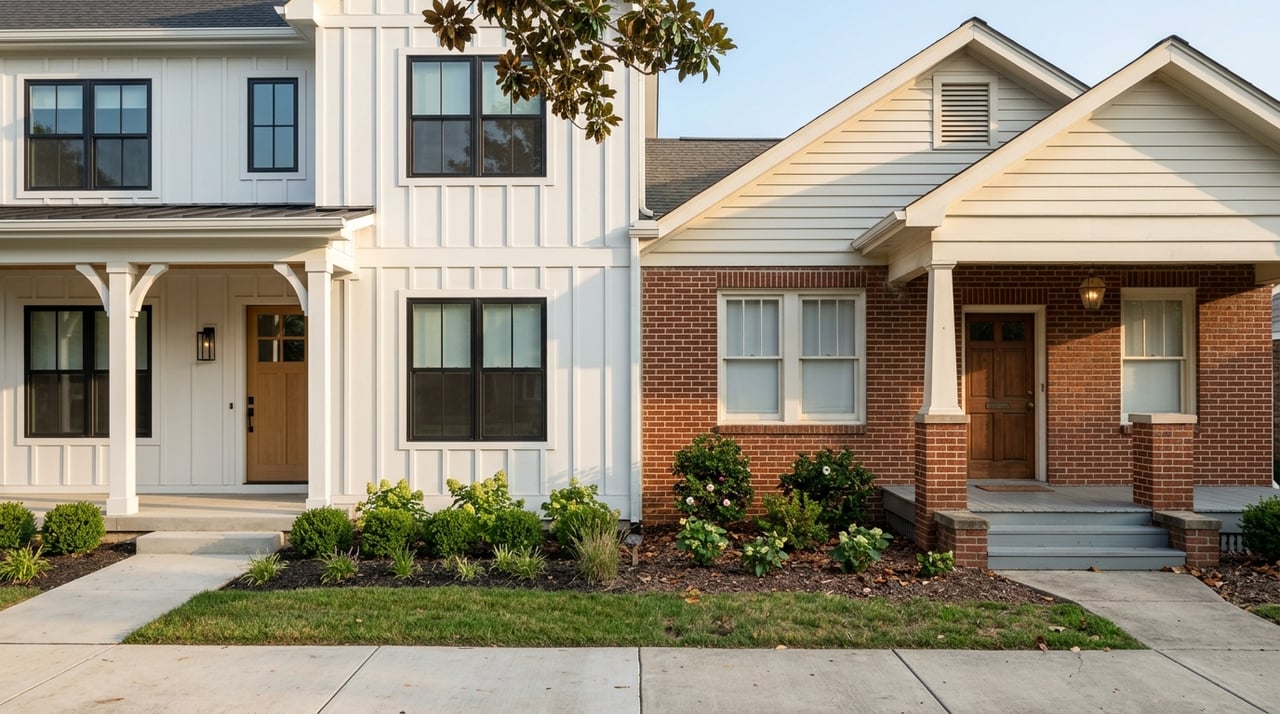
If you have been watching East Nashville, you have probably noticed something right away: a classic bungalow and a brand-new infill home can sit on the same block. That can make the market feel exciting, but it can also make it harder to compare your options. Whether you are buying, selling, or simply trying to understand the neighborhood, this overview will help you sort through how historic homes and new builds fit into today’s East Nashville market. Let’s dive in.
East Nashville Has A Mixed Housing Pattern
East Nashville is not a one-style neighborhood. Nashville planning materials describe the area as a mix of detached homes, accessory dwelling units, townhouses, and stacked flats.
That mix helps explain why older homes and newer construction often appear side by side. In practical terms, you are not looking at a simple old-versus-new market. You are looking at a neighborhood where housing type, block pattern, and local review rules can all shape value and buyer interest.
Historic Homes In East Nashville
Common Historic Home Styles
East Nashville has a substantial historic housing stock. The East Nashville Historic District includes styles such as Beaux Arts, Stick/Eastlake, and Queen Anne, while Metro materials also group local historic homes into Victorian-era, Turn-of-the-Century Neoclassical, Revival, and Bungalow-era categories.
In areas like Lockeland Springs-East End, the housing pattern often includes one-story and one-and-one-half-story homes with porch-centered entries. Common forms include bungalows, cottages, American Foursquare, Spanish Eclectic, Tudor Revival, and Minimal Traditional homes.
What Historic Ownership Can Mean
If you are drawn to an older home, charm is usually only part of the story. Historic homes can offer architectural detail and a strong sense of place, but they may also require more attention to exterior materials and long-term upkeep.
Metro’s historic-home research guidance highlights features like windows, chimneys, additions, materials, and the surrounding neighborhood context. That means buyers and sellers should pay attention not only to interior updates, but also to how much original exterior character remains and what changes have been made over time.
Historic Overlays Matter
Some East Nashville neighborhoods fall within neighborhood conservation or historic preservation overlays, including Lockeland Springs-East End, Eastwood, and Inglewood Place. In these areas, Metro uses design guidelines to help conserve neighborhood character.
For you as a buyer or seller, that matters because exterior work in a historic overlay may require a preservation permit before a building permit. Projects such as infill, large additions, demolition of primary historic buildings, and setback determinations are likely to go through Historic Zoning Commission review.
Maintenance Versus Major Changes
Not every repair triggers the same level of review. Metro distinguishes normal maintenance from larger rehabilitation or alteration work.
Normal maintenance can include:
- Painting
- Glazing windows and doors
- Floor finishing
- Minor chimney repairs
- Minor porch repairs
- Roof repairs up to 33 percent of the roof area
Larger visible changes can require more review and permitting. If you love the look of a historic home, it is smart to also ask what future exterior changes you may want and what process those changes could involve.
New Builds In East Nashville
New Construction Is A Real Part Of The Market
New construction is not a small side story in East Nashville. Zillow’s East Nashville new-construction search currently shows 239 results, which reflects how visible new builds and infill have become in the area.
That inventory gives buyers more choice in layout, finishes, and systems. It also means sellers of both historic homes and newer homes need clear positioning, since buyers can compare age, condition, and design more closely than they could in a tighter market.
How Infill Typically Fits The Neighborhood
Metro’s permit checklist shows that new construction and infill often require detailed submissions, including site plans, setback and easement information, elevation drawings, roof pitch and material details, and window and door specifications. For larger projects, roof plans, streetscapes, or 3D modeling may also come into play.
In overlay areas, design review also looks at issues like massing, height, frontage, porch rhythm, and material compatibility. A helpful way to think about many East Nashville new builds is that they often aim to feel compatible from the street while offering newer layouts and systems inside.
Why Buyers Consider Newer Homes
For many buyers, the appeal of a new build is simple. You may get newer systems, more contemporary floor plans, and less immediate exterior restoration work compared with an older home.
That does not automatically make a new build the better fit. In East Nashville, the right choice usually depends on the specific block, the home’s design, and how well the property matches your goals, budget, and tolerance for future projects.
East Nashville Market Snapshot
Pricing And Pace
Recent neighborhood-level data suggests East Nashville is balanced rather than overheated. Redfin reports a median sale price of $551,265 for the three months ending May 2026, down 6.2 percent year over year, with a median 63 days on market.
Redfin also says homes typically sell about 2 percent below list and go pending in around 53 days. Realtor.com used a different methodology in June 2026 and described East Nashville as balanced, reporting an average sale-to-list ratio of 100 percent.
Those numbers are not as far apart as they may seem. Together, they suggest a market where well-priced homes can still move, but buyers have enough options to compare style, condition, and location with care.
How East Nashville Compares To Metro Nashville
Greater Nashville REALTORS reported an April 2026 residential median price of $503,340 across the broader region, with 57 days on market and about six months of available inventory. East Nashville’s median sale price sits above that metro median.
That gap helps show East Nashville’s ongoing appeal. It also reinforces an important point for both buyers and sellers: presentation, condition, and fit with the block matter when buyers have choices and price expectations are high.
Historic Homes Vs New Builds
The Real Tradeoff Is Not Just Age
In East Nashville, the better question is not whether old is better than new. The better question is what kind of ownership experience you want.
A historic home may offer architectural detail, established streetscape character, and a porch-forward look that many buyers love. A newer home may offer updated systems, a more modern layout, and fewer preservation-related questions, especially outside overlay areas.
Questions Worth Asking On Any Property
If you are comparing homes in East Nashville, these are some of the most useful questions to ask:
- Is the property in a historic overlay?
- What exterior changes would require review or permits?
- How much original material or design detail is still intact?
- Is the block mostly historic homes, newer infill, or a mix?
- Does this home fit the look and expectations of its street?
These questions can help you move beyond surface-level appeal. They also make it easier to judge value when two homes may have very different ownership demands.
What This Means If You Are Buying
If you are buying in East Nashville, you will likely have more stylistic choice than in many neighborhoods. That is a real advantage, but it also means your search should focus on tradeoffs, not just aesthetics.
A historic home may ask more of you over time in maintenance and permitting. A newer home may simplify some of that, but its value still depends on how well it fits the street and how buyers respond to its design in the current market.
In a balanced market, you usually have room to compare and think carefully. That can be helpful if you are deciding between charm and convenience, or trying to find the right middle ground.
What This Means If You Are Selling
If you are selling, East Nashville buyers are often comparing your home against several property types at once. Your home may not just be competing with similar square footage. It may also be competing with a renovated bungalow, a move-in-ready cottage, or a newer infill home a few blocks away.
That makes pricing and presentation especially important. Homes that tend to stand out are the ones that fit their block, match buyer expectations for the price point, and present clearly in the market.
If you are preparing to sell a historic home, details like exterior condition and visible character features can shape first impressions. If you are selling a newer home, buyers may focus more closely on design compatibility, finishes, and overall value compared with nearby options.
East Nashville rewards a thoughtful strategy. If you want a clear read on how a historic home or new build fits today’s market, Gracie Youngblood brings a hands-on, marketing-focused approach to help you buy or sell with confidence.
FAQs
What types of homes are common in East Nashville?
- East Nashville includes a mix of detached homes, accessory dwelling units, townhouses, and stacked flats, which is why historic homes and newer infill often appear close together.
What historic home styles can you find in East Nashville?
- Common historic styles in East Nashville include Beaux Arts, Stick/Eastlake, Queen Anne, Victorian-era, Turn-of-the-Century Neoclassical, Revival, Bungalow-era, American Foursquare, Spanish Eclectic, Tudor Revival, and Minimal Traditional homes.
What is a historic overlay in East Nashville?
- A historic overlay is a local preservation or conservation area where exterior work may be subject to design guidelines and review, depending on the project and property location.
What exterior work may require review on an East Nashville historic home?
- In overlay areas, projects such as infill, large additions, demolition of primary historic buildings, and some setback determinations are likely to be reviewed, while larger alterations can also trigger permit review.
Are new builds common in East Nashville?
- Yes. New construction is a visible part of the market, with Zillow’s East Nashville new-construction search currently showing 239 results.
Is East Nashville a buyer’s or seller’s market right now?
- Recent reporting suggests East Nashville is balanced, with buyers having enough choice to compare homes carefully while well-priced properties can still move.
How long are homes taking to sell in East Nashville?
- Redfin reports a median 63 days on market for the three months ending May 2026, and says homes typically go pending in around 53 days.
How should you compare a historic home and a new build in East Nashville?
- The most useful comparison is usually ownership tradeoffs: historic homes may offer more original character and more exterior-review context, while newer homes may offer updated systems and layouts.