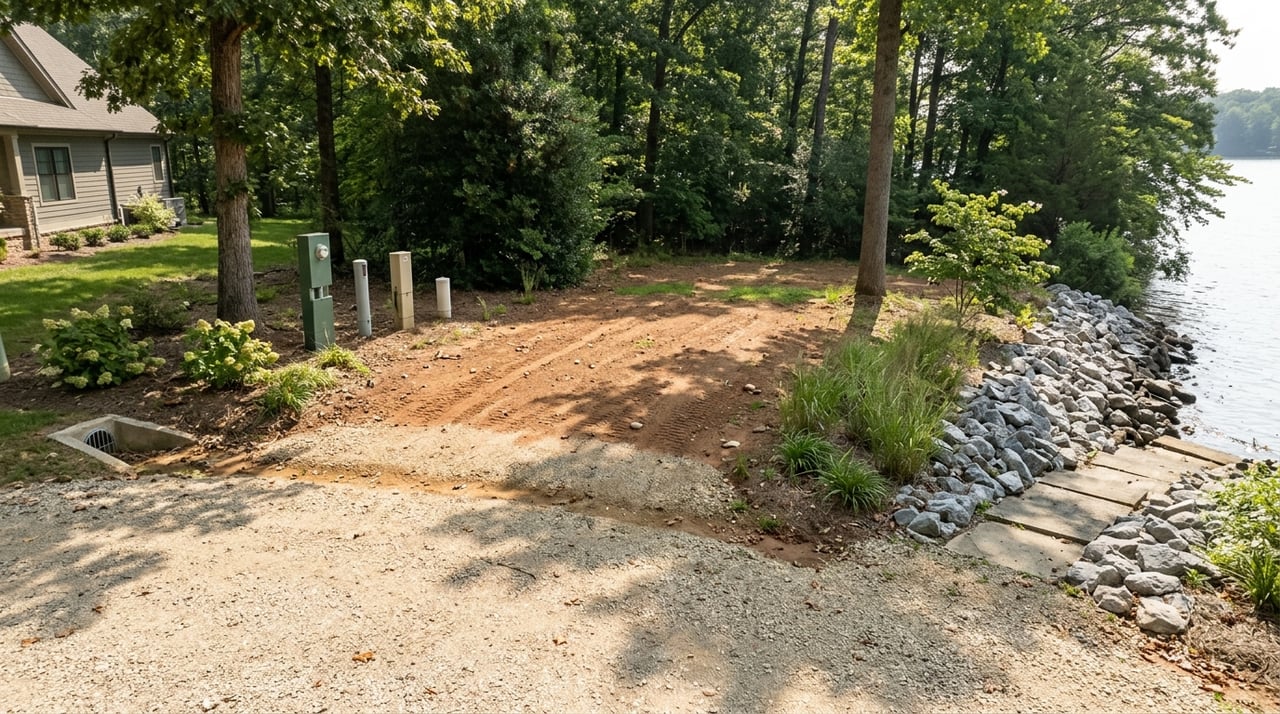
A waterfront lot near Gilbertsville can look simple at first glance: beautiful view, easy lake access, and plenty of room to build. But on Kentucky Reservoir, buying land is about much more than what you see from the shoreline. If you are thinking about purchasing a waterfront or water-access lot, it helps to understand permits, floodplain rules, utilities, and recorded restrictions before you close. Let’s dive in.
Waterfront Rights Come First
Near Gilbertsville, waterfront property sits within the Kentucky Reservoir system managed by TVA. According to TVA’s Kentucky Reservoir information, water levels typically operate around 354 feet in winter and 359 feet in summer, and those changes can affect how a shoreline looks and functions throughout the year.
That matters because a lot may offer a great view in one season but a different bank position, dock usability, or shoreline appearance in another. When you buy near the water here, you are not just buying scenery. You are also buying into a system of shoreline rights, approvals, and seasonal lake-level realities.
Understand TVA Shoreline Permits
Before you fall in love with a lot, ask whether there are existing TVA approvals for anything along the shoreline. TVA says most shoreline construction on its reservoirs requires approval, including docks, piers, boathouses, steps, walkways, and shoreline stabilization.
If improvements already exist, you should request the full permit file. That can include the Section 26a permit, dock drawings, shoreline stabilization approvals, and a survey showing whether TVA land or TVA land rights sit between the lot and the water.
One of the biggest details buyers miss is that permits do not automatically transfer. TVA says a new owner must apply for a Section 26a permit within 60 days after closing. If the seller cannot provide the permit file, TVA notes that buyers can contact its Public Land Information Center to get information tied to the location.
Why frontage is not always true frontage
Some lots are marketed as waterfront, but the actual legal setup can be more limited than buyers expect. If TVA land rights sit between the deeded lot and the lake, the property may function more like an access lot than a true front-row lot.
That distinction can affect how you use the property now and how easy it is to market later. It is also one of the first things future buyers and lenders may want clarified.
Check Buildability Early
A beautiful lot is only valuable if you can use it the way you plan. In Marshall County, building permits are required for all construction, so it is smart to start the buildability conversation early in your due diligence.
If the property is in a Special Flood Hazard Area, the review gets more detailed. Marshall County notes that both a Kentucky floodplain permit and a county permit are required for projects in those areas, and the Kentucky Division of Water also states that development in an identified floodplain requires state and local floodplain permits.
Floodplain status can shape your plans
Floodplain status does not automatically rule out a purchase, but it can change timelines, design choices, and permitting needs. That is why you should confirm whether the lot falls in a regulated floodplain before you finalize your decision.
It is also wise to review the plat and title file carefully. The CFPB’s land-use disclosure guidance treats easements, rights-of-way, covenants, conditions, reservations, limitations, restrictions, and flood plains as material title items.
Septic Can Be a Make-or-Break Issue
For many waterfront lots, sewer service is not available. In those cases, septic feasibility becomes one of the most important early questions.
Kentucky’s onsite sewage program starts with an onsite evaluation to determine whether the site and soils are suitable. Local health department inspectors perform evaluations, and installation must be handled by a certified Kentucky onsite installer unless a homeowner obtains a permit to self-install.
If you are buying a lot to build on later, do not assume septic will work just because nearby homes have systems. Septic suitability is site-specific, so you want that answer as early as possible.
Verify Water Service Lot by Lot
Water availability should also be confirmed before closing. Even in an established area, a vacant lot may still need a tap, permit, or utility coordination.
One local example is North Marshall Water District’s new service process, which includes a plumbing permit and tap payment. Its posted residential figures include a $40 refundable deposit, a $1,526 new residential tap-on fee, and usage billed at $4.06 per thousand gallons plus base charge.
Your lot may or may not be served by that district, but the lesson is the same. Always verify the serving utility, the meter location, and any connection or tap costs before you move forward.
Review Covenants and Access Rules
Not every waterfront lot offers the same kind of access. In the Gilbertsville area, shoreline use may be shaped by private roads, shared dock rules, access corridors, or recorded restrictions instead of simple deeded frontage.
That is why you should ask for all recorded restrictions or covenants, plus any HOA or POA documents if the lot is part of a managed community. The CFPB’s subdivision disclosure rules reinforce that restrictions or covenants should be available to purchasers on request.
Read more than the listing remarks
A listing may highlight water access, dock potential, or a strong building site. Those details are useful, but they should be backed up by the recorded documents, survey, and permit history.
TVA also says it can help determine whether it holds land rights or restrictions at a location, whether a Section 26a permit is required, and what the maximum facility size may be there. In some new developments, residential water-use facilities are generally limited to 1,000 square feet, and TVA property use is usually limited to an access corridor.
Think About Resale Before You Buy
Even if this is your dream lot, it helps to think like a future buyer. The most marketable properties are usually the ones with clear access, clean title records, usable permit history, and no unresolved questions about floodplain status or septic feasibility.
That is not a formal pricing rule, but it is a practical one. The easier it is to document what the lot offers and what can be built, the smoother your purchase can be now and the stronger your resale position may be later.
Questions to Ask Before Closing
If you are comparing waterfront lots near Gilbertsville, keep this checklist handy:
- Is there a current Section 26a permit for the dock, seawall, steps, or shoreline work?
- Does TVA hold land rights or restrictions between the lot and the water?
- Does the lot sit in a Special Flood Hazard Area?
- What county and state permits will be required before building?
- Can the site support septic if sewer is not available?
- Is public water available now, or will a new tap and plumbing permit be needed?
- Are there recorded easements, rights-of-way, covenants, or access restrictions affecting the lot?
- Is there a survey and plat that clearly show flood plains, access, and shoreline-related issues?
Buying a waterfront lot near Gilbertsville is not just about finding the prettiest view. It is about making sure the lot works for your goals, your build plans, and your long-term investment. If you want a clear, local, hands-on approach to sorting through shoreline rights, lot details, and next steps, connect with Gracie Youngblood.
FAQs
What should you verify before buying a waterfront lot near Gilbertsville?
- You should verify TVA permit history, shoreline rights, floodplain status, septic feasibility, utility access, and any recorded easements or restrictions before closing.
Do TVA shoreline permits transfer with a waterfront lot purchase?
- No. TVA says Section 26a permits do not automatically transfer, and the new owner must apply within 60 days after closing.
Can a lot near Kentucky Reservoir be waterfront but not have full shoreline rights?
- Yes. If TVA land or land rights sit between the deeded lot and the water, the parcel may function more like an access lot than true front-row waterfront.
Do waterfront lots in Marshall County require floodplain review?
- If the lot is in a Special Flood Hazard Area, Marshall County says both a Kentucky floodplain permit and a county permit are required.
Why is septic testing important for a Gilbertsville waterfront lot?
- If sewer is not available, Kentucky requires an onsite evaluation to determine whether the site and soils are suitable for an onsite sewage system.
Should you review covenants and easements before buying a waterfront lot in Gilbertsville?
- Yes. Recorded covenants, easements, rights-of-way, and access rules can affect how you reach the property, use the shoreline, and build in the future.