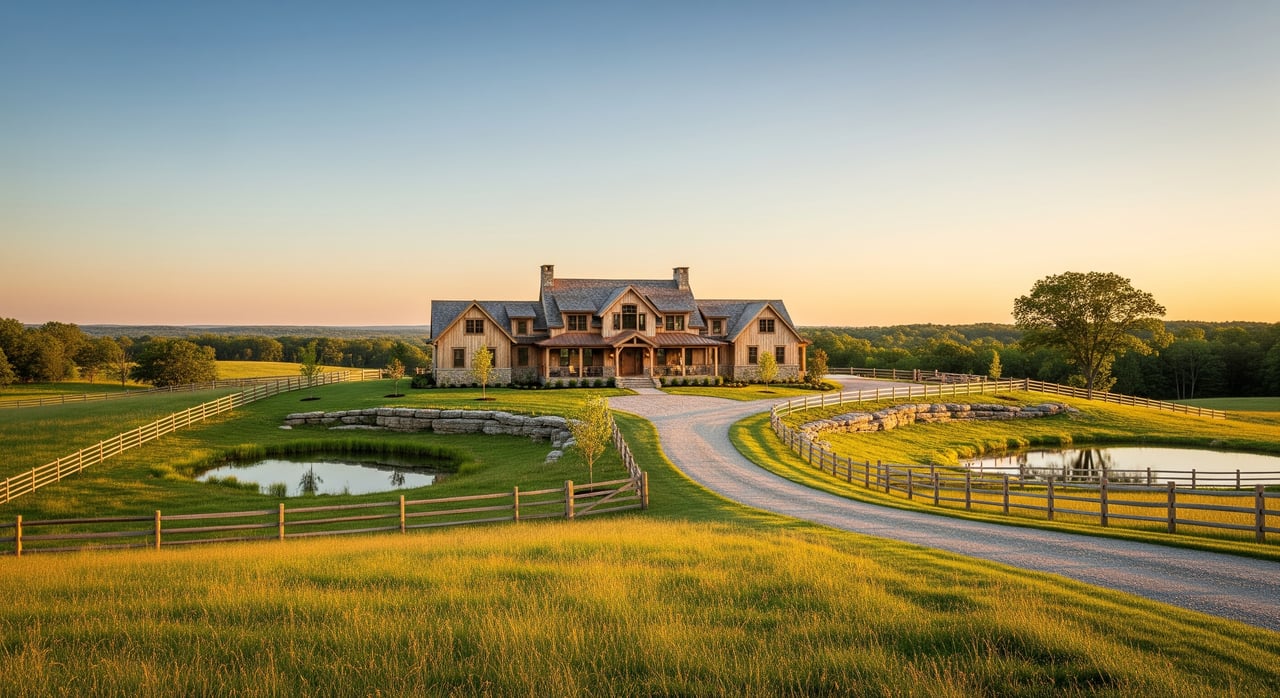
Thinking about buying land near Murray and building your own place? You want a clear roadmap so you can move forward with confidence and avoid costly surprises. In this guide, you’ll learn how to vet a parcel, line up utilities and permits, choose a builder strategy, and understand construction-to-permanent financing options that fit Calloway County. Let’s dive in.
Your Murray build roadmap
- Select a parcel. 2) Complete due diligence on zoning, surveys, restrictions, soils, floodplain. 3) Verify utilities and access. 4) Secure financing for land and construction. 5) Obtain permits and approvals. 6) Prepare the site. 7) Build with lender draw inspections. 8) Convert to a permanent mortgage and secure final occupancy.
Two common financing models: construction-only with two closings, or a construction-to-permanent one-close loan that converts to your long-term mortgage at completion.
Choose the right parcel
Check title and restrictions
Order a title commitment and buy title insurance. Confirm recorded easements for access and utilities, and any covenants or HOA rules that control setbacks or structure types. In parts of Kentucky, verify mineral rights conveyance in the deed to understand any potential surface use conflicts.
Confirm zoning and use
Identify whether the parcel sits inside the City of Murray or in unincorporated Calloway County. Then confirm permitted uses, setbacks, and any site plan approvals with the correct planning and zoning office. If the land is in a platted subdivision, review the recorded plat and covenants for additional restrictions.
Survey and boundaries
If a current boundary survey is not provided, order one to confirm corners, easements, and the buildable area. Lenders commonly require a survey before closing, especially for owner-builders.
Soils and septic feasibility
Use the USDA NRCS Web Soil Survey or a private soils engineer to understand soil type, load-bearing capacity, and septic suitability. The county health department typically requires a percolation test for septic feasibility. Poor or shallow soils may require engineered systems that add cost and time.
Floodplain and insurance
Check FEMA Flood Insurance Rate Maps through the FEMA Flood Map Service Center. Building in a mapped flood zone can increase construction costs, require elevation, and trigger flood insurance if you finance the build. Ask the local floodplain administrator how base flood elevation and permitting apply to your site.
Access and driveways
Confirm legal access by recorded easement or public right of way. If using a private road, clarify maintenance responsibilities and costs. For a new entrance, plan for a county or state driveway permit.
Utilities and connectivity
Verify availability of public water and sewer or plan for a private well and septic system when public service is not nearby. Confirm electric service, line-extension costs, and transformer requirements. In rural areas, propane is common instead of natural gas, and broadband varies by provider, so check coverage early. Before any digging, call Kentucky 811 to locate underground lines.
Taxes and ongoing costs
Contact the Calloway County Property Valuation Administrator for current assessments and tax rates. Ask how improvements are assessed and when new construction will be reflected on the tax roll.
Plan site development
Septic systems basics
The county health department issues septic permits after soils testing and a site plan review. System type and layout depend on your site’s soils and groundwater. Engineered systems may be required for challenging sites, so build this into your budget and schedule.
Private wells and water
Well drilling is regulated, and licensed drillers must follow state standards. Review the Kentucky Division of Water well standards and plan for water testing for quality and safety. Depth and yield can vary by geology, so get multiple quotes.
Electric, gas, and other utilities
Expect an application and fees for electric line extensions, with costs driven by the distance to existing service. New builds often require a service entrance, meter base, and possibly a transformer. Natural gas is limited in many rural areas, so budget for propane tank installation and delivery.
Grading and stormwater
New construction often requires erosion and sediment control. Steeper lots can increase excavation costs and may require retaining walls or specialized foundations. Factor stormwater management into your site plan if you cross local thresholds.
Driveways and roadwork
Driveway permits may be required by the county or the state highway department. Budget for culverts, grading, and gravel or paving. Consider long-term maintenance for private drives.
Environmental checks
If your parcel includes historically sensitive areas or protected habitat, additional review or mitigation may be necessary. Confirm early to avoid delays.
Permits and inspections in Calloway County
Who issues permits
Inside the City of Murray, the city’s building or planning department typically issues permits and enforces local codes. Outside city limits, planning, zoning, and building oversight is through Calloway County. Confirm your jurisdiction before you plan.
Codes and inspections
Local offices can confirm which edition of the International Residential Code or amendments are enforced. Typical inspections include footing, foundation, rough framing, trades, insulation, and final occupancy. Inspectors issue certificates of occupancy at completion.
Septic and well approvals
The health department permits and inspects septic systems. Well construction standards are regulated at the state level and may also be reviewed locally.
Timing and required docs
Plan for 2 to 8 weeks or more depending on complexity and documentation. You may need plans, engineered drawings, energy forms, a site plan, and applicable stormwater or erosion permits. Budget permit and review fees in your preconstruction costs.
Inspections for loan draws
If you finance construction, your lender will likely require inspections tied to draw releases at milestones. Expect these to be in addition to city or county inspections.
Choose your build approach
Owner-builder vs contractor
As an owner-builder, you act as the general contractor, hire and manage trades, and handle permits and scheduling. This can save money but increases your liability and time commitment. Many lenders prefer experienced licensed builders and may limit owner-builder loans unless you show strong experience and controls.
Contracts and protections
Use written contracts for every trade with scope, schedule, payment draws, and warranty terms. Consider retainage and collect lien waivers with each payment. Verify insurance, including builder’s risk and general liability coverage.
How construction financing works
One-close vs two-close
A one-close construction-to-permanent loan funds the build and then converts to your long-term mortgage when the home is complete. You close once and generally reduce the risk of interest rate changes. A two-close approach uses a construction-only loan, then a new permanent mortgage at completion, which can offer lender flexibility but adds a second closing.
Loan mechanics
During construction, you typically make interest-only payments on disbursed funds. Lenders release draws after inspections and often require a 5 to 15 percent contingency for overruns. Expect to provide plans and specs, a fixed-price contract, a cost breakdown, a timeline, builder qualifications, insurance, title clearance, and an appraisal of the finished home value.
Government-backed options
USDA, FHA, and VA each have construction options through approved lenders, with location, income, and occupancy rules. Review the USDA Rural Development single-family programs for rural eligibility and loan outlines. For a general overview of how construction loans work, see the CFPB guide to construction loans.
Conventional and local lenders
Fannie Mae and Freddie Mac offer construction products through participating lenders. Local community banks and credit unions in the Murray area often provide construction-to-perm loans and can be more flexible on land plus build packages. Many construction loans require a higher down payment than standard mortgages, so confirm terms early.
Tips for cross-state buyers
Out-of-state borrowers may face closer lender review. Hiring a local general contractor, using a local lender, and documenting on-site oversight can streamline approvals. National lenders unfamiliar with local permitting can create delays, so prioritize teams who know Calloway County processes.
Timeline and budget
Typical schedule
• Land due diligence and closing: 2 to 6 weeks.
• Permitting and approvals: 2 to 8+ weeks.
• Site prep, septic, well, utilities: 2 to 12+ weeks.
• Home construction: several months to over a year depending on complexity and schedules.
Big cost drivers
• Lot development: grading, driveway, culverts, retaining walls.
• Septic system design and installation, especially for engineered systems.
• Well drilling and pump system.
• Utility line extensions for electric, water, and sewer where available.
• Foundation type and any specialized engineering for slopes or soils.
• Erosion control and stormwater measures.
• Lender fees and construction loan requirements.
• Tap fees or impact fees for utility connections.
Due diligence checklist
• Verify jurisdiction and permit office.
• Order a boundary survey and title commitment.
• Schedule soils and percolation testing.
• Check flood maps via the FEMA Flood Map Service Center.
• Contact utilities early for extension costs and timelines.
• Obtain builder references and review recent local projects.
• Get multiple bids for site work and foundations.
• Confirm lender policies for owner-builders if you plan to self-manage.
• Budget a 10-20 percent contingency for hard costs.
• Ask the PVA about tax impact and timelines.
Next steps
You do not have to navigate this alone. From land scouting and due diligence to coordinating local lenders and builders, a hands-on guide helps you avoid missteps and keep momentum. If you are ready to explore land near Murray or want a second set of eyes on a parcel, reach out to Gracie Youngblood for concierge-level support tailored to Western Kentucky builds.
FAQs
Can I finance land and construction together in Calloway County?
- Yes. Some construction-to-permanent loans allow one closing that funds land and construction, then converts to a long-term mortgage at completion. Availability depends on the lender and program.
Will a bank lend to me as an owner-builder near Murray?
- Many lenders are cautious. Some allow owner-builders with documented experience, detailed plans, and strong cost controls. Local portfolio lenders can be more flexible than large national lenders.
How do I know if I need a septic system?
- Check proximity to public sewer with the City of Murray or county provider. If public sewer is not available, the county health department will require a perc test and septic permitting.
What approvals differ inside Murray city limits vs the county?
- The city and the county have separate permit processes, zoning rules, and code enforcement. Confirm with the City of Murray building and planning department or Calloway County planning and zoning before you design.
Are there federal programs for rural Kentucky builds?
- USDA Rural Development offers programs for eligible rural properties and borrowers, and FHA and VA have construction options through approved lenders. Review eligibility and program rules with your lender and the relevant agencies.